
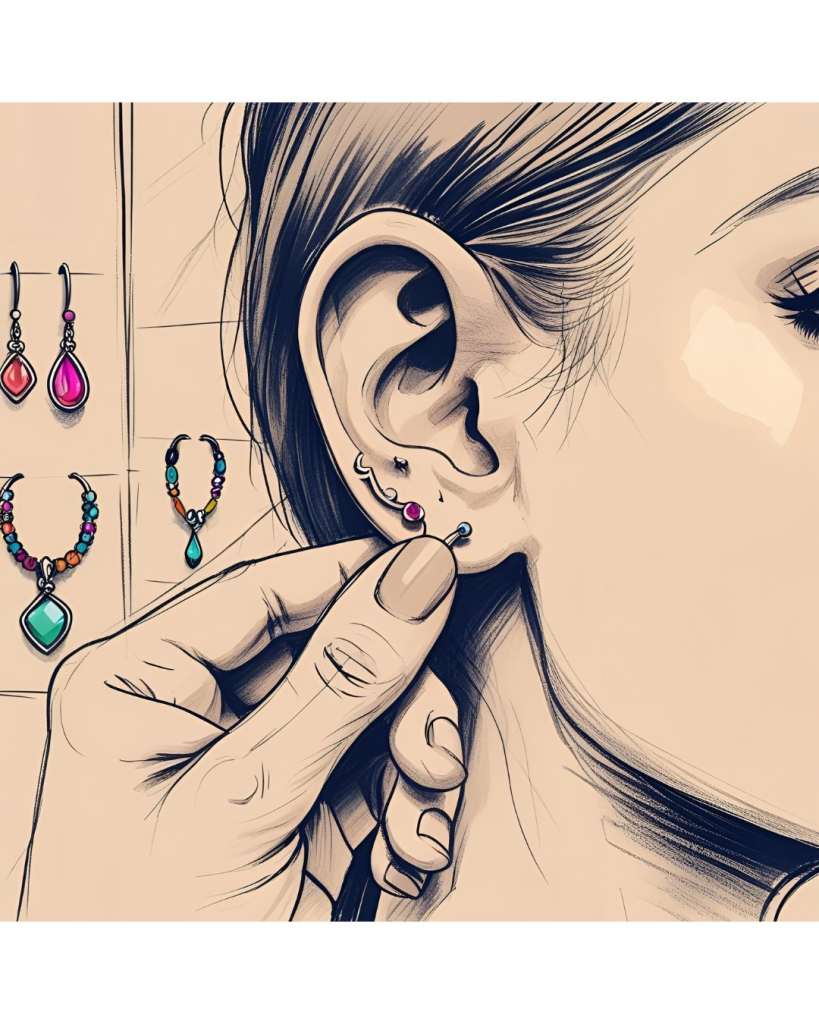
Image generated using Canva
Piercing is getting popular with each passing day. It’s a unique form to express yourself. Whether it’s the ear, eyebrows, nose, navel, or genitals, you need to know about all the important information that can be useful for you and help save you from infections and injuries.
Whether it’s your first try or an addition to your piercing, you should have all the knowledge which I have covered in this blog.
Piercing Parlour Must Be Hygienic: First things first, the place you select for your piercing must follow all the guidelines of safety and hygiene. The artist should be experienced and certified for their job.
Have A Healthy Meal: A proper, healthy meal before your session is essential to keep your blood sugar normal and save you from feeling dizzy and tired.
Hydrate Yourself: Drink at least 1-2 litres of water a few days before your piercing session. Staying hydrated reduces the chance of bleeding and keeps the skin’s elasticity intact.
Avoid Alcohol: Alcohol should be avoided at least 8 hours before your piercing as it is a blood thinner and may cause increased bleeding during piercing and obstruct the healing process.
Avoid Piercing When Sick: Piercing should always be done when you are 100 per cent fit, as the body is already drained and may not be able to handle piercing.
Go By Yourself: It’s a good idea to take a friend or close relative along with you for your session for support and to make you feel comfortable. However, experts recommend that you go alone for the session, as the artist can easily connect with you and help keep your energy under control. So, base that decision on your preferences, as getting your first piercing can be scary if you’re alone.
Your Legal Age Matters: The legal age for getting pierced is different in all states and countries. In the US, there is a legal age of consent for piercing and tattooing. Out of 50 states, 38 states in the US don’t allow piercing without the consent of parents. Some states don’t allow minors to get pierced, and some require them to bring their guardian with them.
Always go for a hollow needle: Always opt for a hollow needle vs the piercing gun. Sharp hollow needles are safer as compared to piercing guns and are even safer and less painful when compared to the other options. An experienced artist will perform the process safely, and the healing process will also be quite fast.
Everything Used Should Be Sterilized: All the things that touch your skin should be properly sterilized to minimize the risk of infection. The list includes everything, such as a chair, a needle, the piercer’s hand, and the jewellery that is going to be pierced. The artist should always use single-use piercing needles, and they should be disposed of after use.
Previous Infections Or Medical Issues: If you have prevailing issues like clotting disorder, diabetes, bleeding or blood-borne virus, then you have a higher chance of infections. You should consult your doctor before committing to piercing. Even individuals who smoke, pregnant women, and people with anaemia have a higher chance of infection during the process. If you had an allergic reaction to your prior piercing, it is advised to avoid piercing.
Consider the possibility of piercing removal: If one fine day, you want to remove your piercing, always consider the scars it will leave when the piercing is removed. Sometimes, your piercing may move, and you may think about removal. That’s why it’s good to keep this at the back of your head.
Follow Aftercare Properly: After the piercing, aftercare is the most important step of your piercing journey. A proper aftercare will keep you away from infections. You can always ask any queries you have in mind. Also, remember that aftercare will vary depending on the location of the piercing on different body parts. A normal aftercare is to wash the piercing area with soap and water twice a day. For oral piercing, using alcohol-free mouthwash is recommended.
Consider Pain: The level of pain is different for different individuals. Two individuals getting pierced at the same place can have a lot of variation in pain. One may have a really bad pain, and the other can have just a pinch of it.
Initial Irritation And Bleeding Is Common: In the early days of piercing, you may feel uncomfortable for some days or even weeks. You may feel discomfort and itching, and yellow or white fluid may leak from your piercing. Even crust can develop around the jewellery.
All the above factors will help you in having the piercing you want with just little or no issues of infections and irritation. Have your dream piercing!