
Image source- BBC
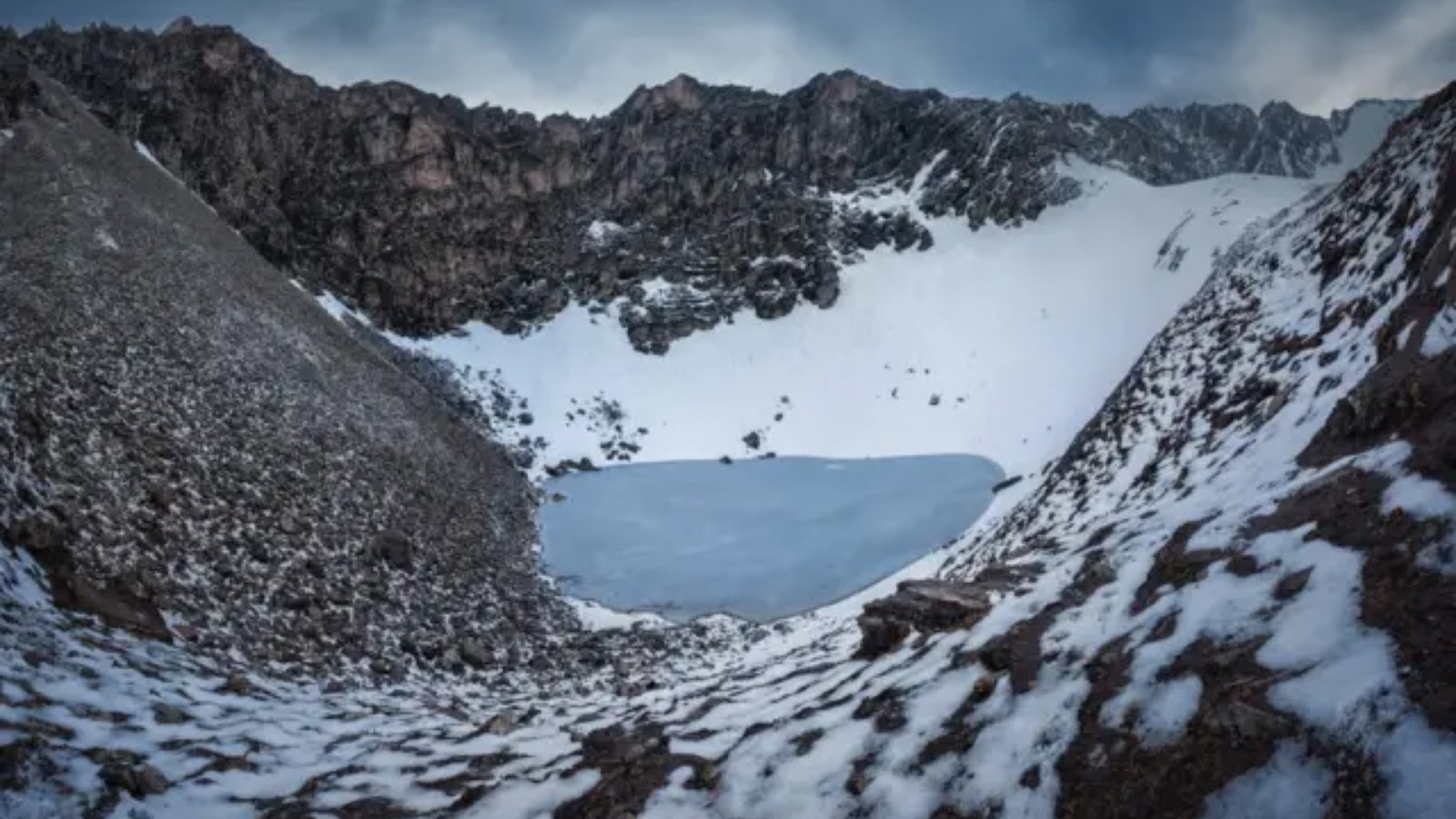
The Roopkund lake is in the Nanda Devi National Park of Uttarakhand’s Chamoli district. The water body is at a very high altitude and remains mostly frozen. But many people call it the ‘Lake of Skeletons’. Read on to know more.
Why is Roopkund Lake known as the Skeleton Lake?
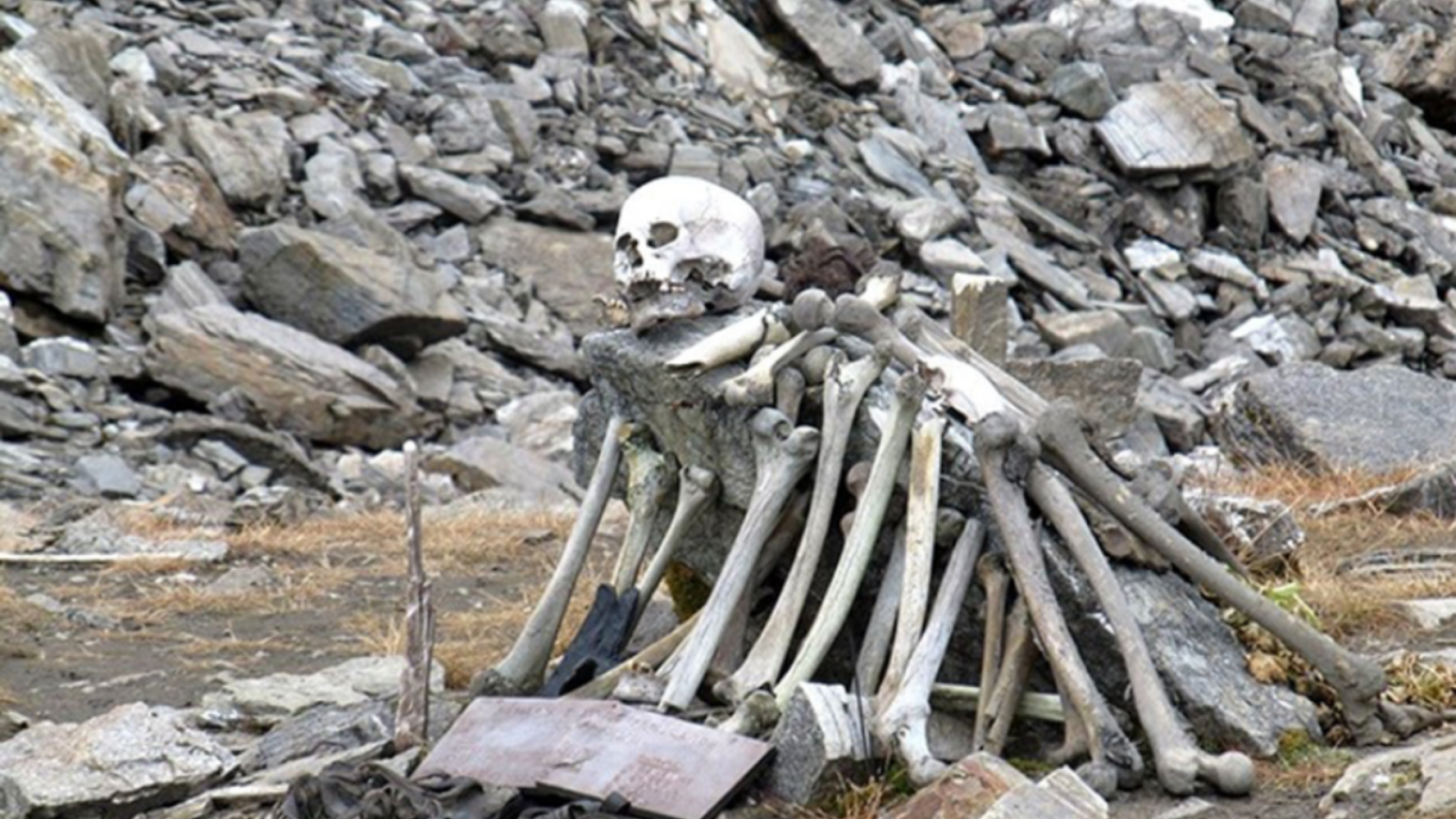
Image source- Mind Brews
Roopkund lake is located at high elevation and stays icy most of the time of the year. But during summer the mysterious lake reveals its secret which is hidden in it. There are hundreds of human skeletons scattered on the shore of the lake.
Who discovered the lake with skeletons?
Indian forest officer H.K. Madhwal uncovered the lake in 1942. He wrote in his statement that he found many things along with the skeletons, like rings, leather shoes, iron spearheads, and wooden art pieces. Some of the remains of the skeletons had flesh attached to them due to severe cold.
The report was made public in 1950, eight years after its creation, and shocked everyone, as the path to the lake was hostile and dangerous. The shocking news left everyone with questions like how these people reached the faraway spot and lost their lives there. The mystery is still unsolved even after years.
The report was made public in 1950, eight years after its creation, and shocked everyone, as the path to the lake was hostile and dangerous. Everyone coming across the shocking news was left with questions like how these people reached the remote place and died there. These questions remain unanswered, even after many years have passed.

Image source- Daily Mail
Different theories about the incident
There are many stories and theories going around for years regarding the skeletons found at Roopkund Lake. Around 600 to 800 skeletons were found in 1942 when India was ruled by the British, and they thought that the skeletons were of Japanese soldiers who may have died while passing through the area during World War 2.
The British theory was proven wrong in 2003 when National Geographic conducted DNA tests of about 30 skeletal remains, and the report confirmed that all the tested skeletal remains were of Indian origin.
Another group of scientists conducted a detailed bone study of the remains using carbon dating. The results were shocking, the remains were not from the same time and were from 800 AD to 1800 AD. This means all the people did not die at the same time due to any natural calamity, but different groups of people over the centuries. Could this be a group ritual suicide spot in the earlier days, or just a concur?
Another probability is that the residues are of General Zorawar Singh and his troopers who were stranded in bad weather after a battle in 1841.
There are lot of tales about the place but the puzzle remains unsolved. Roopkund is a popular tourist spot due to the skeletons and the high-altitude and beautiful lake.